The Ultimate Guide to Utility-Scale Solar Farm Land Clearing
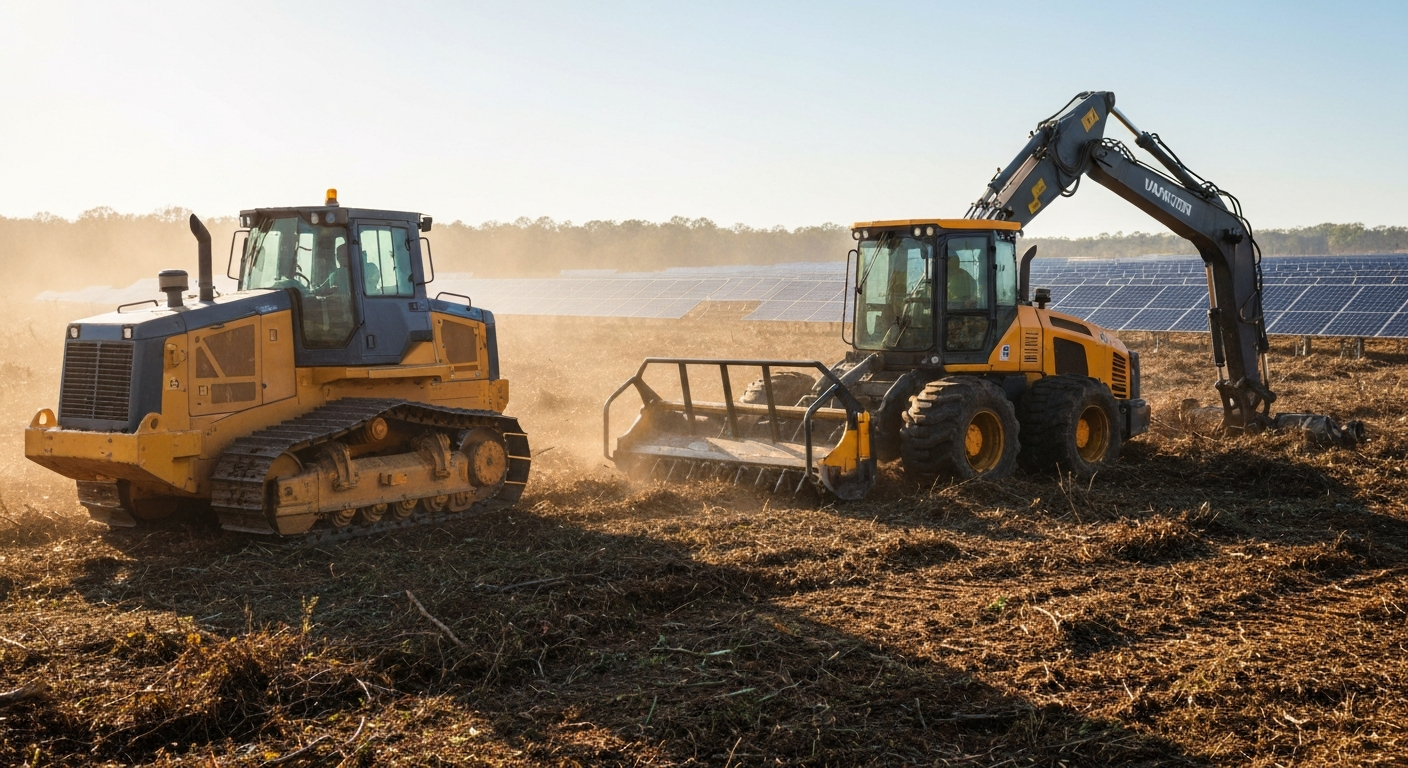
Building a utility-scale solar farm starts long before the first panel is installed. Proper land clearing is the foundational step that dictates the long-term success, safety, and efficiency of the entire project.
Initial Site Assessment and Environmental Compliance
Before any heavy machinery arrives, a thorough site assessment is required. This involves identifying protected wildlife habitats, wetlands, and understanding local zoning laws. A professional land clearing service will work alongside environmental consultants to ensure all brush removal and grading comply with federal and state regulations.
Forestry Mulching and Brush Removal
For sites heavily wooded or covered in thick brush, forestry mulching is often the most efficient method. Instead of bulldozing and burning (which can be environmentally damaging and risky), forestry mulchers grind trees and underbrush into mulch on the spot. This mulch acts as a natural erosion control barrier and returns nutrients to the soil.
Stump Removal and Root Raking
Leaving stumps and large root systems in the ground can cause severe issues when trenching for underground electrical cables. Root raking and complete stump extraction ensure the ground is smooth and ready for the precise installation of solar trackers and mounting structures.
Grading and Soil Stabilization
Once the vegetation is cleared, the land must be graded to the correct specifications. Proper grading ensures adequate water drainage, preventing pooling around high-voltage equipment. Hydroseeding with low-growth, drought-resistant grass is often the final step to stabilize the soil and prevent future overgrowth.