How Proper Vegetation Management Prevents Solar Farm Fire Risks
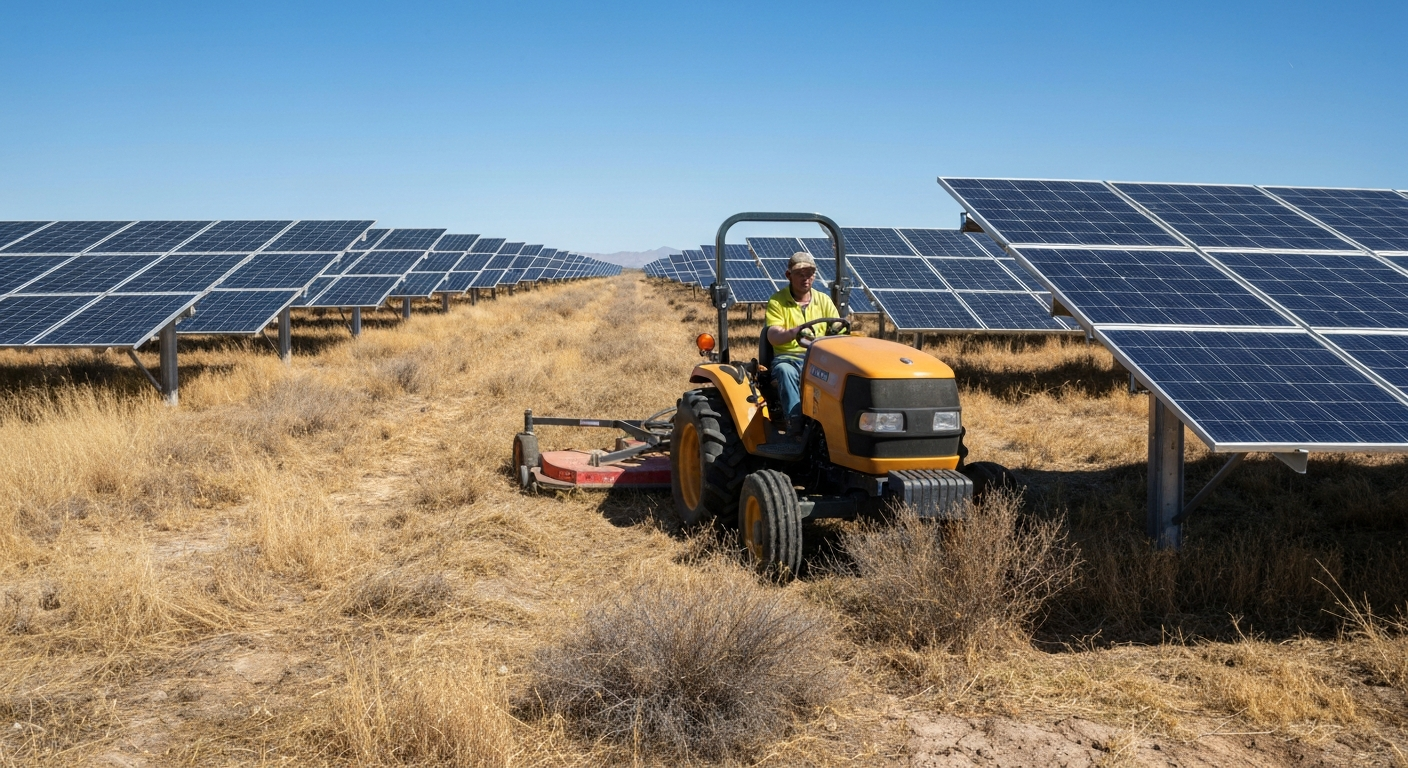
Utility-scale solar farms represent massive capital investments. While the technology is built to withstand the elements, the environment surrounding the panels can pose a severe threat. The most significant, yet entirely preventable, risk is fire caused by overgrown, dry vegetation.
The Anatomy of a Solar Farm Fire
During peak summer months, vegetation beneath and around solar arrays dries out, becoming highly combustible fuel. A single spark from an inverter malfunction, a blown fuse, or a lightning strike can ignite this dry brush. Because solar farms are often located in remote areas, a fire can spread rapidly before emergency services arrive.
Creating Defensible Space
Professional vegetation management creates a "defensible space" around critical infrastructure. By maintaining low grass heights and clearing brush away from transformers, inverters, and perimeter fencing, you remove the fuel ladder that allows fires to spread.
Mechanical Mowing vs. Chemical Control
While herbicides can kill weeds, they leave behind dead, dry plant matter that is highly flammable. Mechanical commercial mowing is the superior choice for fire prevention because it physically reduces the height and volume of the vegetation. When combined with strategic brush clearing, it is the most effective fire mitigation strategy.
Insurance and Compliance
Many insurance providers require strict adherence to vegetation management protocols to maintain coverage. Failing to mitigate fire risks can result in voided policies and massive liability. Routine maintenance isn't just an operational cost; it's a mandatory risk management strategy.