Emergency Vegetation Removal: Dealing with Storm Damage
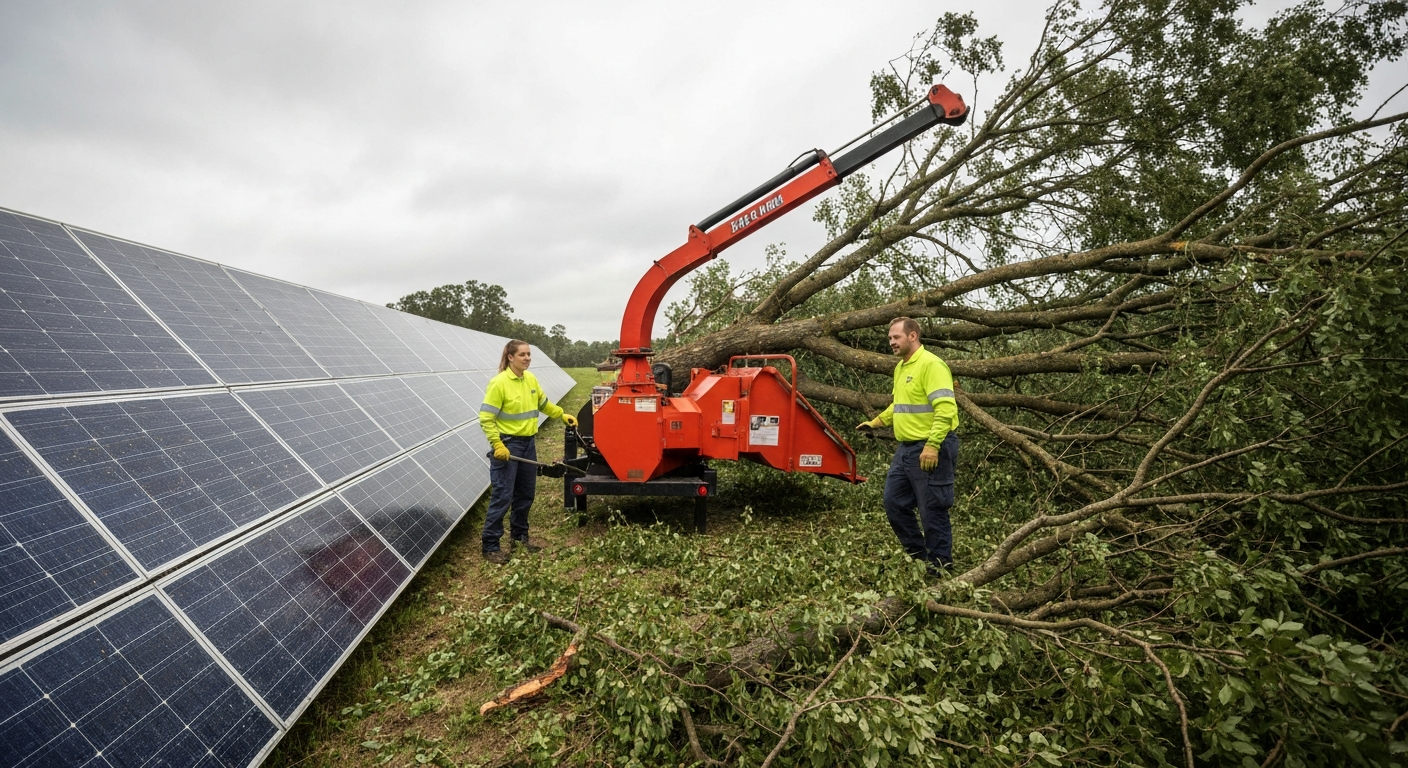
Utility-scale solar farms are exposed to the full force of nature. Hurricanes, tornadoes, severe thunderstorms, and ice storms can cause catastrophic damage, not just to the panels themselves, but to the surrounding environment. When trees fall and debris scatters across the array, rapid emergency vegetation removal is required.
The Danger of Fallen Trees and Branches
Fallen trees can crush panels, destroy mounting structures, and sever high-voltage lines. Even if a tree hasn't directly hit the equipment, large branches resting on fencing or blocking access roads pose immediate security and operational hazards. Attempting to clear this without specialized training is incredibly dangerous.
Rapid Response Protocols
A professional vegetation management company offers emergency response services with guaranteed SLA (Service Level Agreement) response times. They arrive with heavy-duty chainsaws, wood chippers, and grapple trucks to safely dismantle and remove large debris without causing further damage to the delicate solar infrastructure.
Working Around Live Equipment
Storm damage often means exposed wires and unpredictable electrical hazards. Emergency clearing crews must be highly trained in electrical safety protocols, working closely with the site's O&M team to ensure the power is safely isolated before any cutting or clearing begins.
Restoring Normal Operations
The ultimate goal of emergency vegetation removal is to minimize downtime. Every hour a section of the farm is offline due to debris shading or damage, the site loses revenue. Having a trusted emergency clearing partner on speed dial ensures that your asset is protected and restored to full capacity as quickly as possible.